
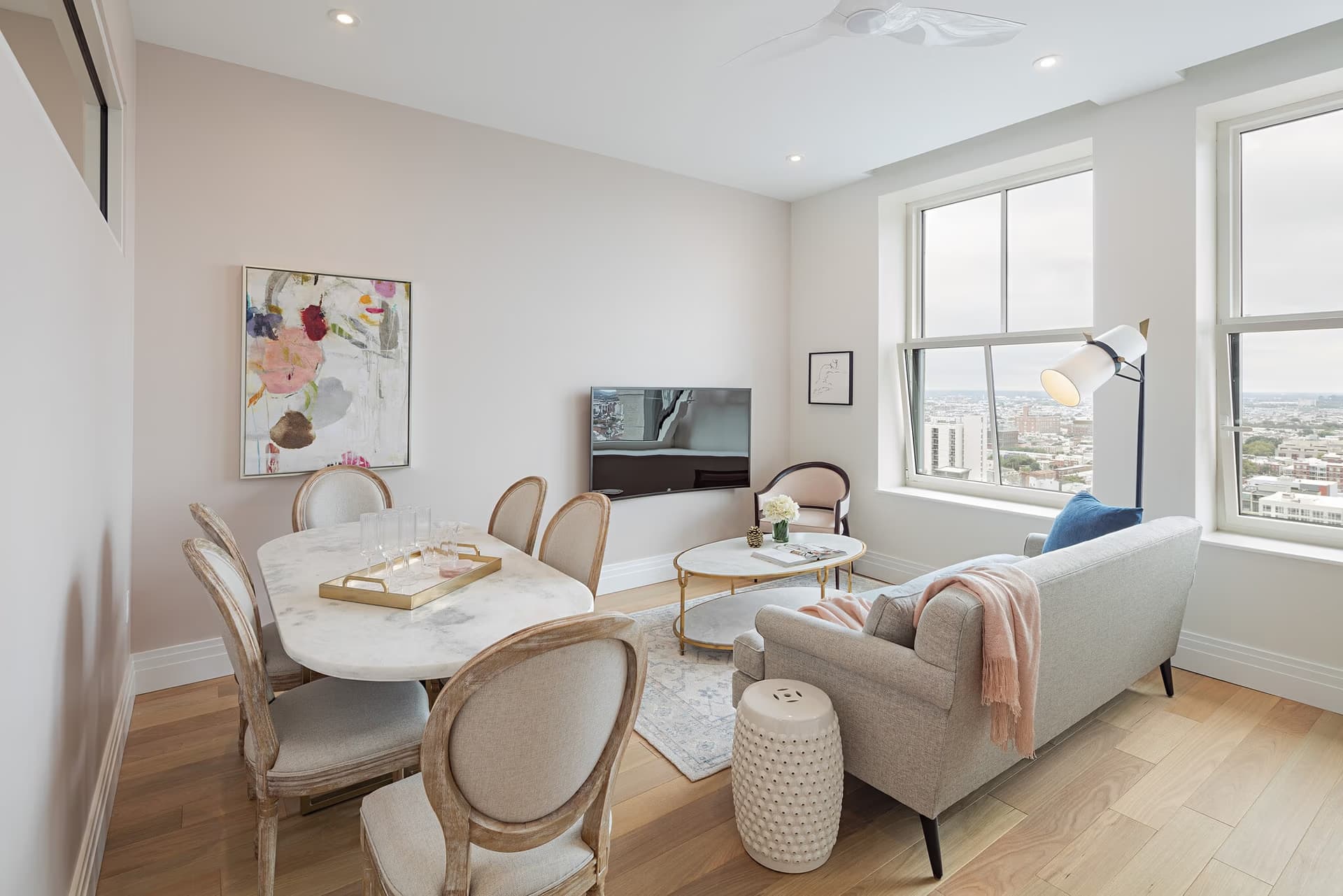
Which is better for a multi-week stay?
For a stay lasting roughly a week to several months, a professionally managed furnished apartment may fit better when separate living and sleeping space, a full kitchen, laundry access, privacy, or a residential routine matters. An extended-stay hotel may fit better when a guest values hotel-style service, a simpler room or suite, or a shorter commitment. Neither category is universally better, and a label does not confirm the features, flexibility, or final cost of a specific option.
Corporate housing is the professionally managed, fully furnished temporary-residential category described by the Corporate Housing Providers Association. The Extended Stay Lodging Association describes extended-stay hotels as lodging for weeks or months that bridges traditional hotels and apartments, commonly with rooms or suites, kitchenettes, dining space, storage, and on-site laundry. Service levels, layouts, equipment, and reservation terms still vary by provider and property.
- Lean toward a furnished apartment when meal preparation, separate rooms, private work calls, laundry routines, or more than one resident drives the decision.
- Lean toward an extended-stay hotel when hotel-style assistance or a compact stay setup matters more than residential separation.
- Compare both when dates may move, because cancellation, early-departure, and extension terms can outweigh a category preference.
Sources: What Is Corporate Housing?, What Is an Extended-Stay Hotel?
Why the length of stay changes the comparison
As a stay gets longer, repeated daily tasks become more important. Cooking, laundry, calls, sleep schedules, visitors, commuting, and sharing space can expose the limits of a room that worked for a few nights. At the same time, a guest who wants on-site assistance may prefer a hotel format even for a longer stay. Start with the expected duration, then test how each option handles a delayed arrival, early departure, or requested extension.
For eligible federal travelers, the U.S. General Services Administration's Long Term Lodging program sources furnished apartments, condominiums, and extended-stay residential units for 30 nights or more when a hotel is impractical. Its comparison highlights full kitchens, separate bedroom and living areas, laundry, and workspace. That is a federal procurement program, not a rule that every traveler should choose an apartment and not evidence about any Hyatus stay.
- One to several weeks: weigh service level and date flexibility heavily, along with the daily cost of meals and laundry.
- Thirty nights or more: compare residential layout and household routines as carefully as the quoted lodging charge.
- Uncertain end date: require written extension and early-departure terms, plus a backup option if the same accommodation cannot continue.
Sources: Long Term Lodging
Furnished apartment versus extended-stay hotel features
Use this table as a question list, not a promise. Industry and federal sources describe common category patterns, but the exact kitchen, room separation, laundry setup, desk, service level, pet rule, parking arrangement, and accessible route must be confirmed for the specific accommodation.

| Decision factor | Professionally managed furnished apartment | Extended-stay hotel |
|---|---|---|
| Kitchen | Often a full residential kitchen; verify appliances, cookware, dishes, and dining setup. | A kitchenette is common; verify cooking surface, refrigerator, utensils, and any use restrictions. |
| Layout | May provide separate living and sleeping rooms; confirm the exact floor plan and doors. | May be one room or a suite; confirm separation, privacy, storage, and resident capacity. |
| Laundry | May be in the unit or elsewhere in the building; confirm access, schedule, and cost. | On-site guest laundry is common; confirm location, payment, hours, and machine availability. |
| Workspace | May include a dedicated desk or a separate area; verify furniture, privacy, and connectivity. | May provide a desk within the room or suite; verify ergonomics, quiet, and call privacy. |
| Services | Support and housekeeping arrangements are provider specific and may follow a residential model. | Hotel-style assistance may be available, but front-desk hours and housekeeping frequency vary. |
| Pets, parking, and accessibility | Never infer approval or suitability from the category; request exact rules, charges, route details, and dimensions. | Never infer approval or suitability from the category; request exact rules, charges, route details, and dimensions. |
Sources: What Is Corporate Housing?, What Is an Extended-Stay Hotel?, Long Term Lodging
Match the format to the purpose of the stay
The right format depends on the routine the accommodation must support. A business traveler taking confidential calls has a different constraint from a caregiver coordinating appointments, a visiting scholar learning a new campus, or a household rebuilding routines after a move or treatment. Use the purpose to identify deal-breakers, then verify them against the actual option.
Johns Hopkins Medicine advises patients and visitors to clarify accessibility, children in the party, total guests and rooms, waiting lists, cancellation rules, and a backup plan. University of Washington's temporary-housing guidance points academic visitors toward furnished options designed around temporary stays. Those examples show the questions to ask; they do not establish that one category or provider will fit a particular person.

| Use case | When a furnished apartment may fit | When an extended-stay hotel may fit |
|---|---|---|
| Business assignment or relocation bridge | Separate work and living areas, meal control, or space for a relocating household matters. | A compact setup and hotel-style assistance matter more than room separation or residential routines. |
| Medical or caregiver travel | Private routines, cooking, laundry, or separate rest space matters after exact access needs are verified. | On-site assistance or a simpler room setup matters after access, occupancy, and service details are verified. |
| Academic, research, or sabbatical visit | A furnished temporary base can reduce household setup and support work outside the campus day. | The visit is shorter or the guest prefers a hotel service model over a residential setup. |
| Family transition or recovery routine | Room separation, cooking, laundry, and privacy are important for the household's day-to-day plan. | A smaller household values hotel-style help and can confirm that the room layout and occupancy rules fit. |
Sources: What Is Corporate Housing?, What Is an Extended-Stay Hotel?, Hotels and Housing, Temporary Housing Solutions
Compare the complete cost stack
A lower room or apartment quote is not automatically the lower-cost stay. Compare the same dates, residents, cancellation terms, and required features, then add every cost the household expects to incur. Cooking may change meal spending, but only if the kitchen setup fits the household and groceries are practical. Laundry, parking, transport, deposits, taxes, and fees can also change the comparison.
Ask for an itemized quote and mark each amount as included, optional, refundable, usage based, or paid to another party. Do not use an advertised nightly, weekly, or monthly label to infer the final total. Reprice the comparison if dates, resident count, parking, pets, or services change.
- Rate structure: exact dates, resident count, minimum commitment, extension basis, and early-departure treatment.
- Taxes and fees: every required charge, deposit, authorization hold, refund condition, and payment deadline.
- Meals: likely grocery, delivery, restaurant, breakfast, and kitchen-supply costs for the actual routine.
- Laundry: machine access, payment, detergent, service charges, and the time or transport required.
- Parking and transport: parking charges, transit, rides, fuel, tolls, and the door-to-door route to each important destination.
- Reimbursement caps: the employer, agency, insurer, benefit, or program rule that applies to the traveler, supported by current documentation.
Sources: Per Diem Rates
Keep per diem, business tax, and medical tax rules separate
GSA establishes location-specific lodging and meals-and-incidental-expense rates for eligible federal travel. Those rates are reimbursement limits or planning inputs under the applicable agency rules, not private-market prices and not a promise that a lodging provider will accept or match them. Other employers and programs may use different rules, so confirm the applicable cap, required receipts, approval path, and treatment of taxes and incidentals before booking.
IRS Publication 463 says ordinary and necessary travel expenses may be deductible when a taxpayer is temporarily away from the tax home for business and otherwise qualifies. It generally treats an assignment realistically expected to last one year or less as temporary and one expected to last more than one year as indefinite, while changed circumstances and other facts can alter the result. The publication also requires expense records and supporting documentation.
Medical lodging uses a different framework. IRS Publication 502 limits lodging that can be included as a medical expense to specific circumstances, including lodging primarily for and essential to qualifying medical care, and applies a low per-night, per-person ceiling. The reviewed Porte Brown summary reflects those restrictions, including limits for an eligible companion and the distinction between lodging and meals. Tax rules change and depend on the facts, so use the current IRS publication and a qualified tax professional rather than this housing comparison to decide deductibility.
- Ask the responsible employer, agency, insurer, benefits administrator, or program which current rule applies before relying on reimbursement.
- Keep itemized quotes, invoices, payment records, dates, resident names, and the business or medical documentation requested by the responsible reviewer.
- Do not treat a per diem rate, tax ceiling, or possible deduction as a Hyatus price, discount, reimbursement approval, or eligibility decision.
Sources: Per Diem Rates, Publication 463: Travel, Gift, and Car Expenses, Publication 502: Medical and Dental Expenses, Medical Expense Deductions: Eligibility, Thresholds, and Planning Tips
Boston shows why local lodging rules must be checked
Lodging classification is local. Boston's short-term-rental page defines a short-term rental as paid residential occupancy for fewer than 28 consecutive calendar days and states that stays of 28 days or longer are not short-term rentals under that city framework. It also describes separate treatment for qualifying hospital, government, or nonprofit contracts and for furnished institutional or business stays supported by specified corporate-housing contracts.
Boston is one regulatory example, not a national rule and not a statement that any Hyatus option qualifies for an exclusion. Requirements, taxes, registrations, contracts, and minimum stays can differ by city, building, operator, booking purpose, and date. Ask the provider what legal and contractual structure applies to the exact stay and consult the current local authority when classification matters.
Sources: Short-Term Rentals
Use a booking and logistics checklist
Send the same requirements to each provider so the comparison stays consistent. Separate essential needs from preferences, and ask for the response in writing. If a feature, service, or location would rule an option out, verify it for the exact accommodation instead of relying on a category page, photo, map label, or earlier stay.
Keep a workable backup. Johns Hopkins specifically advises a backup when lower-cost housing is waitlisted and recommends checking cancellation policies. The GSA long-term lodging requirements list likewise gathers location, length, unit size, commute range, parking, pets, accessibility needs, and the full period of performance before quotes are compared.
- Dates and extension risk: arrival, departure, notice deadlines, delayed arrival, early departure, extension request, and the fallback if dates move.
- Layout and occupants: exact unit, beds, doors, resident count, children, approved guests, privacy, and work or rest routines.
- Amenity criticality: kitchen inventory, laundry arrangement, workspace, connectivity, linens, utilities, and any item that changes the decision.
- Service level: check-in support, front-desk or provider hours, housekeeping frequency, maintenance, deliveries, and after-hours contact.
- Proximity: door-to-door route to work, hospital, campus, school, or family, checked at the time and mobility conditions that matter.
- Compliance positioning: booking purpose, required contracts, occupancy terms, taxes, records, employer rules, and applicable local requirements.
- Special needs: functional accessibility, service animals or pets, parking, equipment, quiet, children, and the exact route through the building.
- Backup plan: another lodging option, transport alternative, first-night essentials, and a response if the preferred stay or extension is unavailable.
Sources: Hotels and Housing, Long Term Lodging
What to confirm with Hyatus before requesting a stay
When considering Hyatus, identify the destination, exact daily anchor, dates, possible changes, residents, stay purpose, and every essential need. Ask Hyatus to confirm the specific option and written terms for that request. This article does not confirm a Hyatus property, rate, availability, amenity, policy, travel time, accessibility feature, billing arrangement, or suitability for a business, medical, academic, relocation, or recovery stay.
Use the current Hyatus Explore and contact paths to compare public destinations and request answers. A request, quote, or discussion does not reserve a stay unless Hyatus provides the applicable confirmation through the booking process.
- Exact address context and unit details, plus live availability for the requested dates and resident count.
- All-in pricing and an itemized explanation of what is included, optional, refundable, usage based, or charged separately.
- Kitchen, laundry, workspace, connectivity, room separation, furnishings, utilities, linens, and functional accessibility details.
- Cancellation, minimum-stay, early-departure, extension, pet, service-animal, guest, occupancy, delivery, and building-access rules.
- Check-in process, identification, arrival support, parking location and charges, transport assumptions, and after-hours contact.
- Corporate billing, invoice, receipt, documentation, or reimbursement-support options required for the request.
- Whether the exact accommodation and terms are suitable for the stated purpose, without relying on this general comparison.
Keep Planning with Hyatus
Sources
- 1. What Is Corporate Housing? - Corporate Housing Providers Association (accessed 08/18/2026)
- 2. What Is an Extended-Stay Hotel? - Extended Stay Lodging Association (accessed 08/18/2026)
- 3. Long Term Lodging - U.S. General Services Administration (accessed 08/18/2026)
- 4. Per Diem Rates - U.S. General Services Administration (accessed 08/18/2026)
- 5. Publication 463: Travel, Gift, and Car Expenses - Internal Revenue Service (accessed 08/18/2026)
- 6. Hotels and Housing - Johns Hopkins Medicine (accessed 08/18/2026)
- 7. Short-Term Rentals - City of Boston (accessed 08/18/2026)
- 8. Temporary Housing Solutions - University of Washington WorkLife (accessed 08/18/2026)
- 9. Medical Expense Deductions: Eligibility, Thresholds, and Planning Tips - Porte Brown (accessed 08/18/2026)
- 10. Publication 502: Medical and Dental Expenses - Internal Revenue Service (accessed 08/18/2026)