
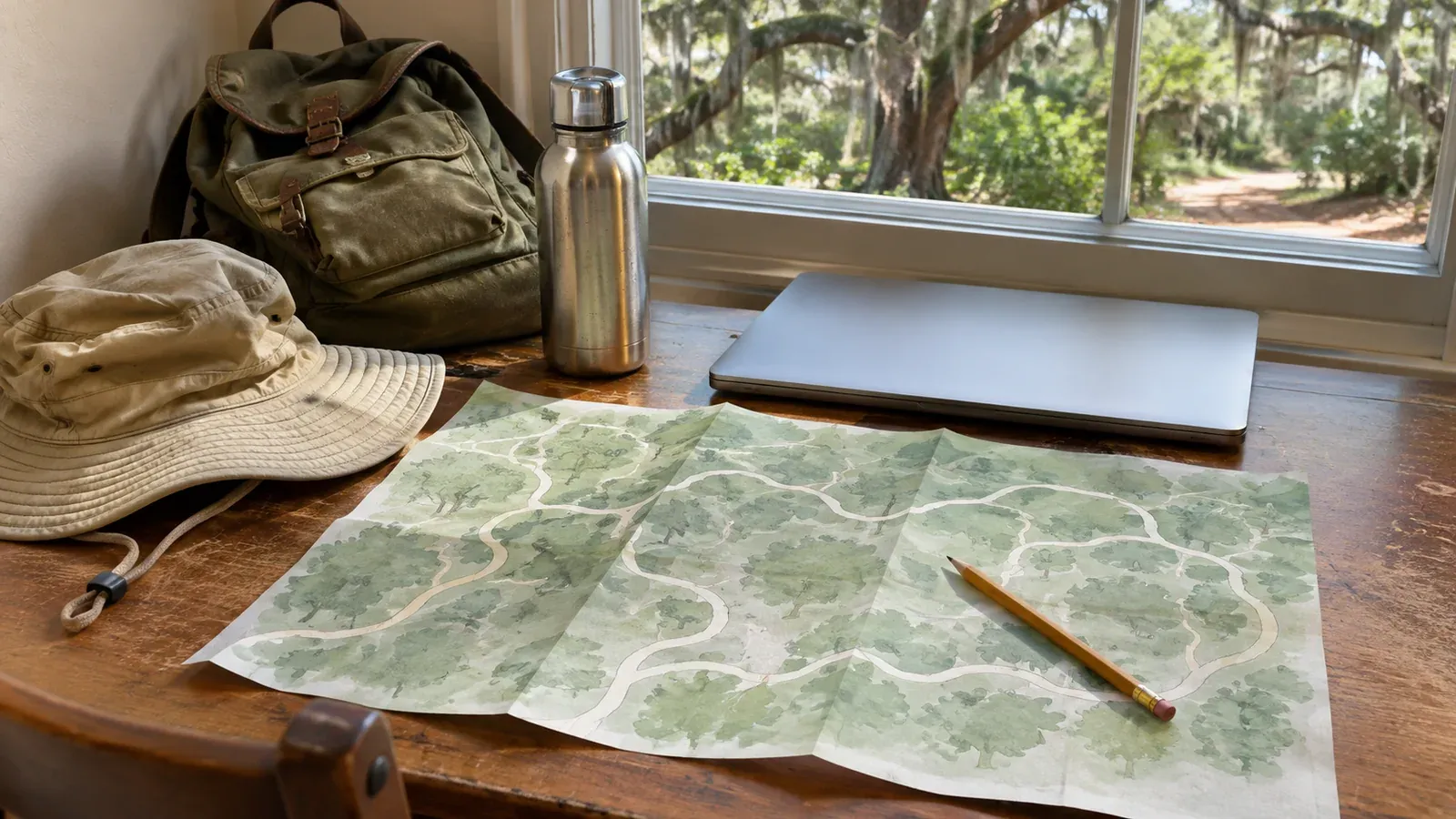
Wormsloe suits Savannah visitors who want an outdoor history outing with a choice of walking distances. Start with the shuttle to the museum, then decide how much trail walking to add. This guide compares two ways to spend your visit using the site's visitor guidance, with historical context to help you understand what you see and practical checks for access and breaks.
Hyatus publishes this guide and operates the Savannah accommodation mentioned below.
Key Takeaways
The museum stop is a useful point to pause before choosing whether to continue into the grounds.
- Start with a narrated shuttle ride along Live Oak Avenue, then explore independently from the museum stop.
- The Interpretive Trail is 0.8 mile on dirt. Choose your walking plan around the surface, weather and everyone's comfort.
- The oak avenue was laid out in the 1890s, long after the colonial estate was established.
- Wormsloe's history includes enslaved people cultivating the plantation; the landscape tells more than the avenue photograph alone.
Sources: Wormsloe Shuttle Tours and Interpretive Trail, Accessible Facilities: Wormsloe, Live Oak Avenue, Wormsloe Plantation
Start at the Visitor Center
Set your destination to 7601 Skidaway Road, Savannah. Plan your outward and return journey from your accommodation so the visit fits around your day. The site's telephone number is 912-353-3023.
The published shuttle guidance describes departures every half-hour and an approximately 20-minute narrated tour along Live Oak Avenue, with no reservation required. Get off at the museum to explore at your own pace. When you are ready to leave, return to the shuttle stop for the ride back to the visitor center.
Sources: Georgia DNR Parks Phone Book, Wormsloe Shuttle Tours and Interpretive Trail
Choose How Much Walking to Add
For a visit with less walking, make the shuttle and museum your main plan. If you want to see the historic remains in their outdoor setting, add the Interpretive Trail. Georgia State Parks lists that trail as 0.8 mile with a dirt surface; choose footwear and a pace that suit those conditions.
These are suggested combinations, not official packages. The longer option adds the landscape around the ruins, while the shorter one lets you focus on the introduction and exhibits. Trail distance is only part of the choice: surface, weather and each person's energy matter too.
At a Glance
Two Ways to Shape Your Visit
| Visit Style | Main Focus | Practical Trade-Off |
|---|---|---|
| Shuttle and Museum | Avenue interpretation and museum exhibits | Less trail walking; save the ruins for another visit |
| Shuttle, Museum and Interpretive Trail | Historic remains and the outdoor setting | Adds a dirt trail; discuss assistance if needed |
Shuttle and Museum
- Main Focus
- Avenue interpretation and museum exhibits
- Practical Trade-Off
- Less trail walking; save the ruins for another visit
Shuttle, Museum and Interpretive Trail
- Main Focus
- Historic remains and the outdoor setting
- Practical Trade-Off
- Adds a dirt trail; discuss assistance if needed
Sources: Wormsloe Shuttle Tours and Interpretive Trail, Accessible Facilities: Wormsloe, Wormsloe Field Trips and Trail Details
Look beyond the Oak Avenue
The museum displays artifacts excavated at Wormsloe. Outside, the interpretive route passes the tabby ruins and marsh on its way to the Colonial Life Area. That combination gives the visit a useful rhythm: begin with objects and interpretation indoors, then see the remains within the landscape.
Demonstrations in the Colonial Life Area take place during programs and special events. If watching interpreters demonstrate tools and skills is a priority, choose a listed program rather than building your day around an assumed demonstration.
Wormsloe was also a working plantation. The New Georgia Encyclopedia documents enslaved people cultivating the property in the 1750s and its later nineteenth-century plantation agriculture. Keep that history in view alongside the story of Noble Jones and the surviving structures: the grounds reflect the labor and lives of people whose experience was very different from that of the estate's owners.
When Was the Oak Avenue Planted?
The avenue belongs to a later chapter than the colonial ruins. University of Georgia Libraries dates its layout to the 1890s, when Wymberley Jones De Renne created the live oak approach. The familiar canopy is therefore not a surviving picture of the estate as it looked in the eighteenth century.
Knowing that distinction changes what you look for: the approach is a later landscape design leading toward much older remains. Enjoy the trees, then allow the museum and grounds to broaden the story.
Sources: Live Oak Avenue
Plan for Access and a Break
Georgia State Parks lists the museum and day-use restrooms under Wormsloe's accessible facilities, along with a ranger-driven golf cart available with advance notice. Contact the site about your particular mobility needs before choosing a route. Ask about boarding, the ground you would need to cover and the assistance appropriate to your visit.
There is also a picnic area. Bringing water and a packed lunch gives you a straightforward way to take a break around different appetites and energy levels, especially if you add the trail after the museum.
Sources: Accessible Facilities: Wormsloe, Wormsloe State Historic Site
Keep the Useful Checks Together
Use this short checklist to settle the logistics before committing everyone to the same route. A shuttle ride helps with the approach, but it does not establish that every outdoor section will suit every visitor.
- Before leaving: check the official site for admission, opening hours and any program you want to attend, then check the weather.
- If you need assistance: call 912-353-3023 in advance to discuss your needs and confirm arrangements.
- At the visitor center: ask about trail conditions, the shuttle stop and the final return departure.
- For the day: bring water, suitable footwear and any picnic food, and keep your journey back to your accommodation in mind.
Sources: Wormsloe State Historic Site, Wormsloe Shuttle Tours and Interpretive Trail, Accessible Facilities: Wormsloe, Georgia DNR Parks Phone Book
A Savannah Base for Your Stay
Hyatus Savannah Two-Bedroom is a furnished apartment in Savannah with two bedrooms and two bathrooms. Its listing includes a kitchen and dryer. The separate bedrooms may suit travelers sharing a stay who want their own rooms, while a kitchen gives you space to prepare everyday meals between outings.
Before choosing the home, check the sleeping arrangement and access details for your group. Use the listing below to review the home, or browse Hyatus vacation rentals and city guides if you are still shaping your trip.
For help deciding whether this Savannah home fits, send Hyatus your dates, guest count and access requirements through the contact link below.
Sources: Hyatus Savannah Two-Bedroom
Keep Planning with Hyatus
Sources
- 1. Wormsloe State Historic Site - Georgia State Parks (accessed 11/17/2026)
- 2. Wormsloe Shuttle Tours and Interpretive Trail - Georgia State Parks (accessed 11/17/2026)
- 3. Accessible Facilities: Wormsloe - Georgia State Parks (accessed 11/17/2026)
- 4. Wormsloe Field Trips and Trail Details - Georgia State Parks (accessed 11/17/2026)
- 5. Live Oak Avenue - University of Georgia Libraries (accessed 11/17/2026)
- 6. Wormsloe Plantation - New Georgia Encyclopedia (accessed 11/17/2026)
- 7. Georgia DNR Parks Phone Book - Georgia Department of Natural Resources (accessed 11/17/2026)
- 8. Hyatus Savannah Two-Bedroom - Hyatus (accessed 11/17/2026)